
Charlottesville, VA · Garage Door Service
What Charlottesville's Cold Winters Do to Older Garage Doors
Most Charlottesville garage doors date to the 1980s and 90s, built before current insulation rules, and the region's cold winters find every weak spot fast.
- Repairs & new doors
- Springs & openers
- Serving 4 nearby communities
What the Weather Here Does to It
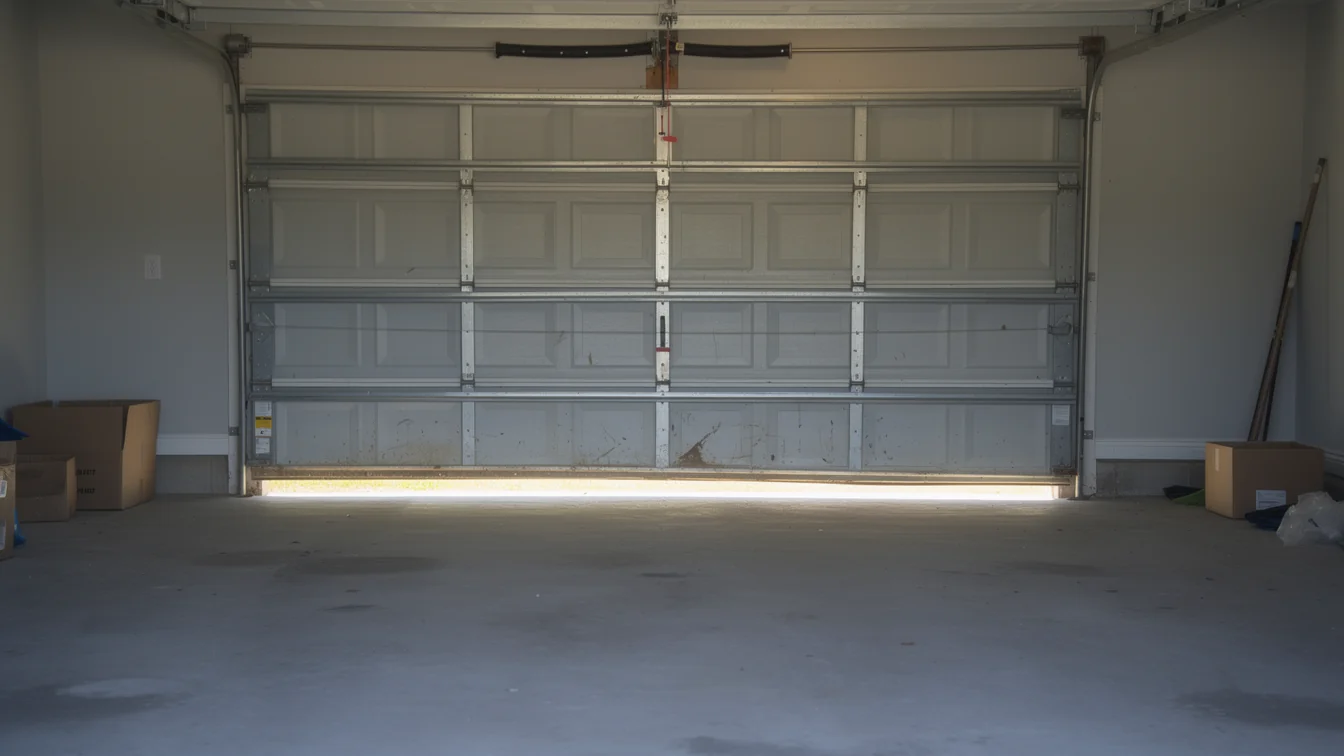
Charlottesville sits in a cold-climate band classified as severe, and that matters more for a garage door than for almost anything else on the house. Steel panels contract in a hard freeze, and a door that closed flush in August can bind or rattle in January. Housing in this service area went up mostly between 1944 and 2008, with the median build year landing in 1982, and across the eleven named areas we work the bulk of the stock is 1980s and 90s construction. Doors from that era were built before current insulation rules, so a lot of them are single-layer steel with no thermal break. In a severe cold band, that uninsulated steel is the first thing to show stress: the panel skin shrinks faster than the frame it's riveted to, seams open up, and torsion springs lose a measurable amount of tension once the garage itself drops below freezing. If your door feels heavier to lift in winter than it does in July, that's not in your head. It's a 40-year-old spring doing less work in the cold than it was wound to do.
Checking It Yourself
Start with the balance test: disconnect the opener, lift the door by hand to waist height, and let go. It should hold. If it drops, the spring has lost tension, which is common on original 1980s and 90s hardware once winter sets in. Next, run a hand along the weatherstripping at the bottom panel. On a house from the median 1982 build year, that strip has usually been replaced at least once, and if it's cracked or flat it's not sealing the cold out, it's just decoration. Check the panel seams for daylight, especially on doors with no foam backing. Listen for a grinding sound in the tracks, which usually means a roller has gone dry, not necessarily something broken. What I won't tell you to do yourself is touch the torsion spring. Springs under tension in a cold garage are the single most common injury call we get, and it's not worth it to save a visit. If the balance test fails, that's a call, not a weekend project.
What You Pay
I don't have a price list to hand you here, and I'd rather tell you that than make one up. What drives the number on a job in this area is almost always the age and type of door you're starting with. A 1980s or 90s steel door with no insulation is usually a straightforward spring or roller repair. Once a door has sagged enough that the panels are racked, or the insulation has failed inside a sandwich-style panel, repair starts to cost close to what replacement does, and at that point replacement is the better call. Houses in this service area range from 1944 construction to builds as recent as 2008, so the hardware we find varies a lot house to house even on the same street. The honest answer is that nobody can give you an accurate number without seeing the door, the opener, and what's actually failed. Anyone quoting a flat price over the phone for a spring job, sight unseen, is guessing.
What Is Going On
Most of the calls we get in this service area trace back to the same thing: original hardware sized for a door that's never been touched since the house was built. With 10,566 households here and 7,726 owner-occupied houses, a lot of those doors are still running the springs and cable drums that came with the garage in 1982 or thereabouts. That hardware wasn't built for a severe cold band's worth of freeze-thaw cycling over four decades, and it shows up as fatigue cracks in the spring coil, frayed cable at the drum, or a panel that's quietly sagging at the bottom corner. A door built for a house near Keswick or Earlysville in the 1980s wasn't built to the R-value expectations in place today either, so even a door that still opens and closes fine is often just cold steel with no insulation doing a job it was never designed to do well. None of this is an emergency on its own. It's wear, on schedule, for houses of this age in this climate.
Frequently asked questions
Why is my garage door so much heavier to lift in winter?
Cold steel contracts and torsion springs lose tension in low temperatures, so a spring that balances the door fine in summer can fall short once the garage drops near freezing. This is especially common on original hardware from 1980s and 90s builds, which make up most of the housing stock in this area. If it's noticeably heavier, get the balance checked before the spring fails outright.
Is it worth insulating an old steel garage door instead of replacing it?
Depends on the door's condition, not just its age. If the panels are flat and the seams are tight, a retrofit kit can help. If the door is already sagging or the steel has rust-through, insulation won't fix the structural problem and you're better off putting that money toward a new door built to current standards.
How often should I check the springs on an older door?
A visual check twice a year, especially before winter, catches most problems early. Look for gaps in the coil or rust at the spring ends. We don't recommend adjusting or touching the spring yourself; tension-related injuries are the most common call we get, and it's a quick, inexpensive visit to have it checked properly.
Related garage door services in Charlottesville
More garage door guides
Book garage door service in Charlottesville
Call now or request a quote - tell us what the door is doing and where you are.