
Charlottesville, VA · Garage Door Service
Garage Door Maintenance Built Around Charlottesville's Housing and Winters
Garage door maintenance for Charlottesville homes built mostly between 1944 and 2008, where cold winters and aging springs wear hardware faster than owners expect.
- Repairs & new doors
- Springs & openers
- Serving 4 nearby communities
Why It Happens Here
Most of the housing across this service area went up between 1944 and 2008, with the median build year landing at 1982. Across the eleven named areas we cover, the bulk of that stock dates to the 1980s and 90s. That matters because torsion springs, cables, and rollers from that era are original equipment on a lot of doors still in daily use, and none of it was built to last forty years without attention.
Charlottesville sits in a cold, severe climate band, and that's the other half of the story. Steel contracts in the cold, lubricant thickens, and the freeze-thaw cycle through winter works on galvanized cable strands and spring coils in a way a mild-climate house never experiences. A spring rated for a certain number of open-close cycles gets there faster here because the metal is working harder in the cold months.
Put those two things together - older hardware, colder winters - and you get the pattern we see on service calls: a track that's slightly out of plumb because the slab shifted with frost, a spring that's lost tension faster than the sticker on it suggests, an opener drive gear worn from pulling a door that's heavier to move in January than in July. Maintenance here isn't a luxury add-on. It's catching the specific wear this climate and this housing stock produce before a spring lets go on a cold morning.
What You Pay
We don't post a flat maintenance price on this page, because what a visit actually involves depends on the age and type of hardware on your door, and that varies house to house even within the same neighborhood. A door with its original 1980s torsion spring and a worn-out opener drive gear needs a different visit than one with hardware replaced ten years ago.
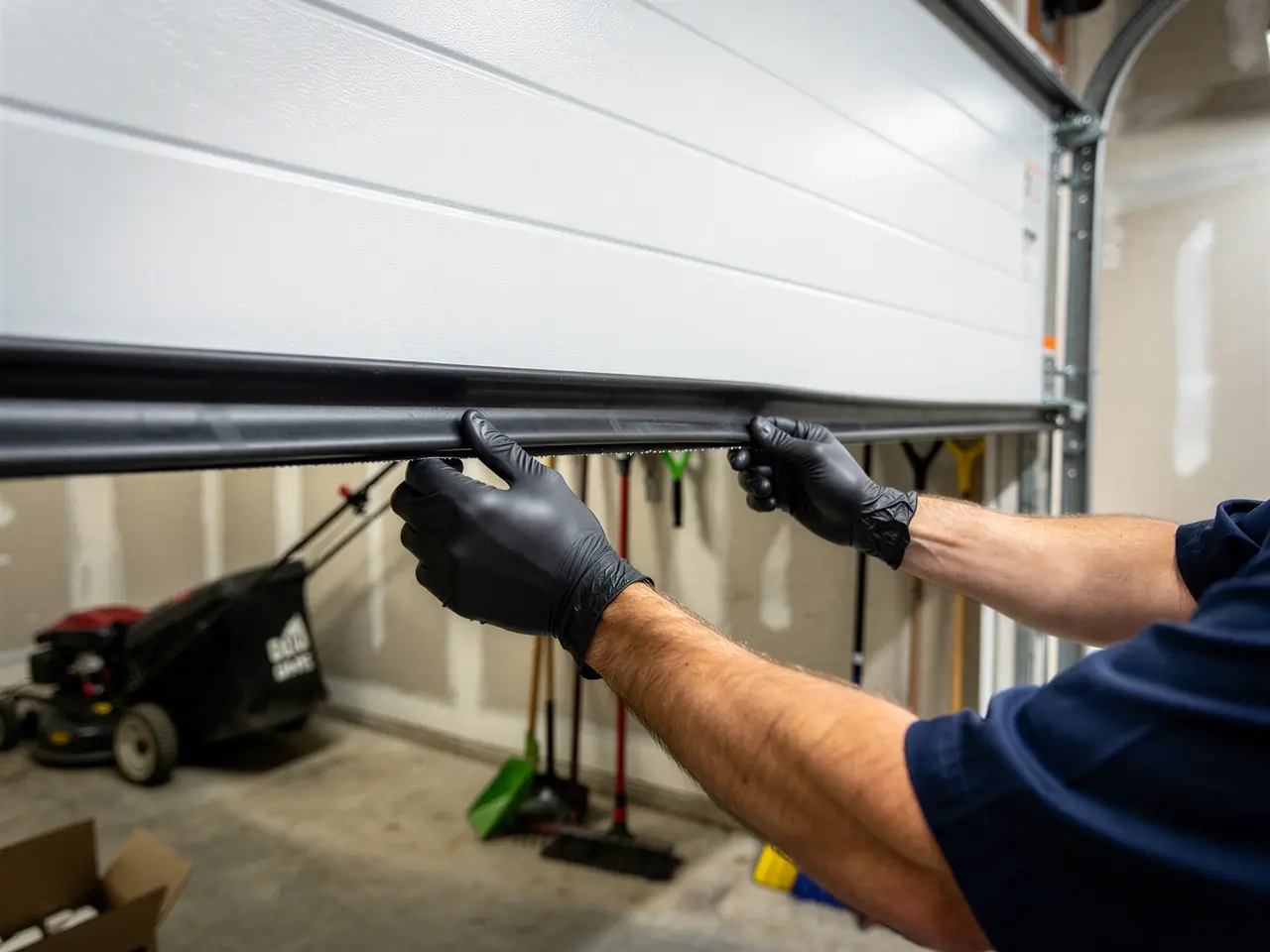
What we can tell you is what we're looking at: spring tension and wear, cable fraying, track alignment, roller condition, opener force settings, and the fasteners and brackets that frost-heave and seasonal shift tend to loosen. Given that a majority of houses across this area were built in the 1980s and 90s, we spend a lot of our maintenance calls on springs and cables that are at or past the point where failure is a when, not an if.
The honest limitation here: if your hardware is old enough and worn enough, a maintenance visit can turn into a conversation about replacement instead of adjustment, because tightening and lubricating a spring that's already fatigued doesn't buy you much time. We'll tell you straight which category your door falls into rather than charge for a tune-up that won't hold.
How Long It Takes
A maintenance visit covers the same core checklist on every job: spring tension, cable condition, track alignment, roller wear, hardware fasteners, and opener force and limit settings. How much of that checklist needs real work - versus a quick inspection and a note for next year - depends on the door's age and how it's been treated, which in a service area where most houses are 1980s-and-90s vintage often means more than a quick look.
Winter adds a wrinkle. Cold makes grease stiffen and metal contract, so a door that seems fine in summer can show a tight spot or extra opener strain in January that wasn't there before. That's part of why a maintenance check in this climate band isn't a one-and-done: a door tuned in the fall can still need a cold-weather adjustment once the real freeze sets in.
We don't commit to a universal time window on this page because every door is different and we'd rather tell you honestly on the call what your specific hardware needs than promise a number that doesn't hold up once a tech is actually under your door.
How It Shows Up
On houses from this area's typical build era - 1944 through 2008, with a lot clustered in the 1980s and 90s - the wear pattern tends to follow the same script. A door that used to open smooth starts catching at the same spot in the track every time, which usually means a roller or a track bracket that's shifted slightly with the ground underneath it. An opener that strains harder on cold mornings than it did in summer is telling you the spring is compensating for the stiff cold grease and metal contraction instead of actually doing its job.
A door that sags slightly on one side when it's down, or one that doesn't stay put halfway up when you pull the release cord, is showing you a spring that's lost tension - common on original hardware from older stock in this climate band. Frayed strands near the bottom roller bracket on a cable are another sign specific to the freeze-thaw cycle working on galvanized wire year after year.
None of these show up overnight. They build slowly across winters, which is exactly why routine maintenance catches them while it's still an adjustment, not an emergency call.
Frequently asked questions
How often should I get my garage door serviced in Charlottesville?
We don't have a universal interval that fits every door on this page, since it depends on the hardware's age. Given that most houses here were built in the 1980s and 90s and sit in a cold, severe climate band, older original hardware generally needs more frequent attention than newer installs - we'll give you a specific recommendation once we've seen your door.
Does winter weather really affect garage door maintenance here?
Yes. Charlottesville sits in a cold, severe climate band, and the freeze-thaw cycle through winter stiffens lubricant, contracts steel, and accelerates wear on springs and cables faster than it would in a milder climate. That's a real factor in scheduling maintenance here, not just general advice.
My house was built in the 1980s - does that matter for maintenance?
It does. A large share of the housing across this service area dates to the 1980s and 90s, meaning a lot of original torsion springs and cables are well past the point where failure risk climbs. A maintenance check on a door that age usually turns up more wear than one installed in the last decade.
Can maintenance fix a spring that's already losing tension?
Sometimes, but not always. If a spring is fatigued from age and cold-weather cycling rather than just under-lubricated, tightening and adjusting it buys limited time. We'll tell you honestly on the visit whether your spring is a maintenance case or a replacement case rather than charge for a tune-up that won't hold.
Related services
By Neighborhood
Maintenance across the Charlottesville area
We also handle maintenance in these Charlottesville-area suburbs.
Book garage door service in Charlottesville
Call now or request a quote - tell us what the door is doing and where you are.