
Charlottesville, VA · Garage Door Service
Garage Door Opener Repair in Charlottesville
Opener trouble in a Charlottesville house built between 1944 and 2008? We diagnose and fix openers strained by cold winters and aging hardware across the service area.
- Repairs & new doors
- Springs & openers
- Serving 4 nearby communities
Why It Happens Here
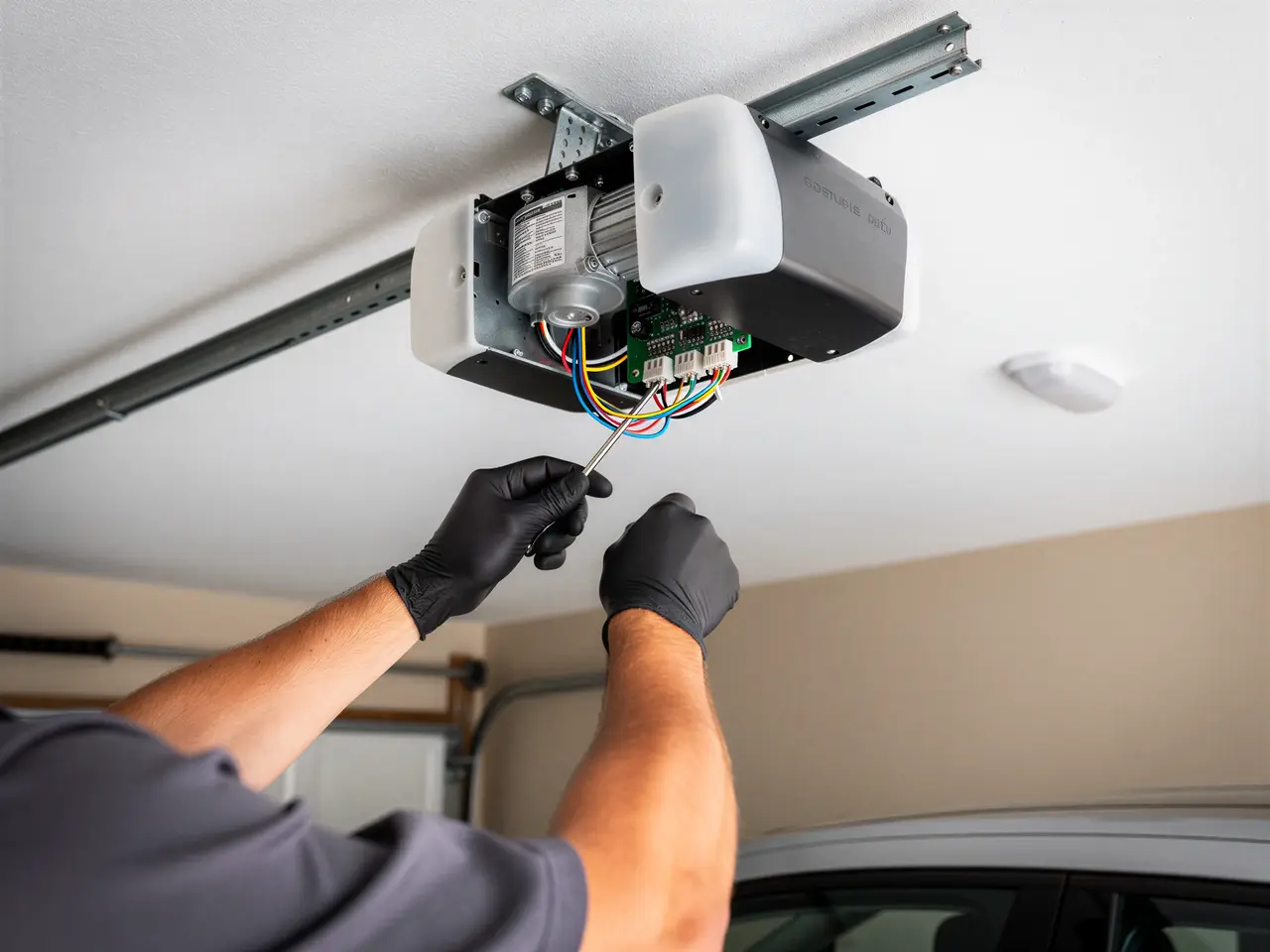
Most of the houses we get called to in this service area went up somewhere between 1944 and 2008, with the bulk of that stock dating to the 1980s and 90s across the eleven named areas we work. That matters for openers because a unit installed when a house was built in, say, 1985 is now well past the age where gears, circuit boards, and safety sensors start failing on their own schedule, not yours. Chain-drive units from that era grind and strip nylon gears; early sensor eyes drift out of alignment as houses settle.
The cold is the other half of it. Charlottesville sits in a severe cold climate band, and that changes how an opener behaves in January versus July. Grease in the drive gear thickens in cold garages, which makes the motor work harder and burns out capacitors faster than it would in a mild climate. Logic boards that read temperature-sensitive components can throw force-sensing errors on the coldest mornings, reversing a door that isn't actually obstructed. We see a real seasonal spike in opener calls tied directly to cold snaps, not to anything wrong with the door itself.
Put those two things together - an aging housing stock and a climate that's hard on motors and electronics - and opener repair becomes one of the most common calls we take across this area, distinct from spring or panel work.
What You Pay
We don't post a flat number here because opener repair covers a wide range of jobs - a burned-out capacitor, a stripped gear kit, a dead circuit board, or a full logic board replacement - and the age of your unit drives most of that range. An opener from a 1980s or 90s build, which describes a large share of the housing in this service area, often needs parts that aren't stocked the way current models are, which can add a day or two versus a straight swap.
We'll tell you on site whether the fix is a part or whether the opener itself has reached the point where putting more money into it doesn't make sense. That's an honest call we make regularly on units that have been running since the house was built - sometimes the motor's fine and it's one sensor; sometimes the whole unit is tired and replacement is the better spend. We walk you through both before any work starts, and you decide.
How Long It Takes
Opener diagnosis is usually quick once we're looking at the unit - most failures show a pattern (clicking with no movement, lights blinking a set number of times, a reversal that happens at the same spot every time) that points to a specific part. Straightforward fixes like a capacitor, a sensor, or a drive gear kit are typically same-visit work.
Where it stretches out is parts availability on older units. A chain-drive opener installed when a house in this area was built in the 1980s or 90s may use a gear kit or board that isn't a same-day pull, especially outside the main manufacturer lines. In cold weather we also see more calls bunch up at once, since the same temperature drop that stresses one opener tends to stress several on the same street the same week. We'll give you a real estimate once we've seen the unit and know what we're ordering, rather than a number that doesn't hold up.
How It Shows Up
The door won't open or close from the wall button or remote, but the motor hums - that's usually a capacitor or a stripped gear, not the door itself binding. Lights on the opener blink a set number of times with no door movement: that's the unit telling you which fault it logged, and it's diagnostic, not random. A door that reverses partway down, every time, in the same spot, points to a sensor or a force-setting issue that tends to show up more in cold weather when components read differently than they do in summer.
Sometimes it's quieter than that: the opener runs but the door lags behind the sound, or it takes two or three button presses before anything happens. That's often a logic board starting to go, which is more common in units that have been in service since a house's original build. If your opener is silent altogether - no hum, no lights - check the breaker and the wall switch first; it's sometimes that simple, and we'd rather you not pay a call-out for a tripped breaker.
Frequently asked questions
My opener clicks but the door doesn't move. What's wrong?
That's almost always a stripped drive gear inside the opener housing, not a problem with the door or spring. It's common on units installed when older houses in this area were built, since the nylon gear wears out with age and cold makes it worse. It's a straightforward part to replace in most cases.
Why does my opener act up more in winter?
Charlottesville sits in a severe cold climate band, and cold thickens the grease in the drive mechanism and stresses sensor and logic board components. We see a real jump in opener calls tied to cold snaps - reversing doors, blinking error lights, and motors that strain to start are all more common when temperatures drop.
Is it worth repairing an opener from the 1980s or should I replace it?
Depends what's actually broken. If it's one part - a capacitor, a sensor, a gear kit - repair usually makes sense. If the board's failing and the motor's also tired, we'll tell you honestly that replacement is the better spend rather than patching a unit that's going to keep failing.
How fast can you get to an opener that won't respond at all?
We'll give you a real window when you call rather than a number that doesn't hold. Check your breaker and wall switch first - sometimes a totally dead opener is that simple and doesn't need a service call at all.
Related services
Related guides
By Neighborhood
Opener Repair across the Charlottesville area
We also handle opener repair in these Charlottesville-area suburbs.
Book garage door service in Charlottesville
Call now or request a quote - tell us what the door is doing and where you are.