
Charlottesville, VA · Garage Door Service
Opener Repair for Gordonsville's 1979-Era Garage Doors
Opener repair for Gordonsville homes, most built around 1979. We diagnose chain-drive failures, worn gears, and cold-weather sensor faults, then drive the 18 miles out from Charlottesville.
- Repairs & new doors
- Springs & openers
- Serving 4 nearby communities
What Is on the Truck
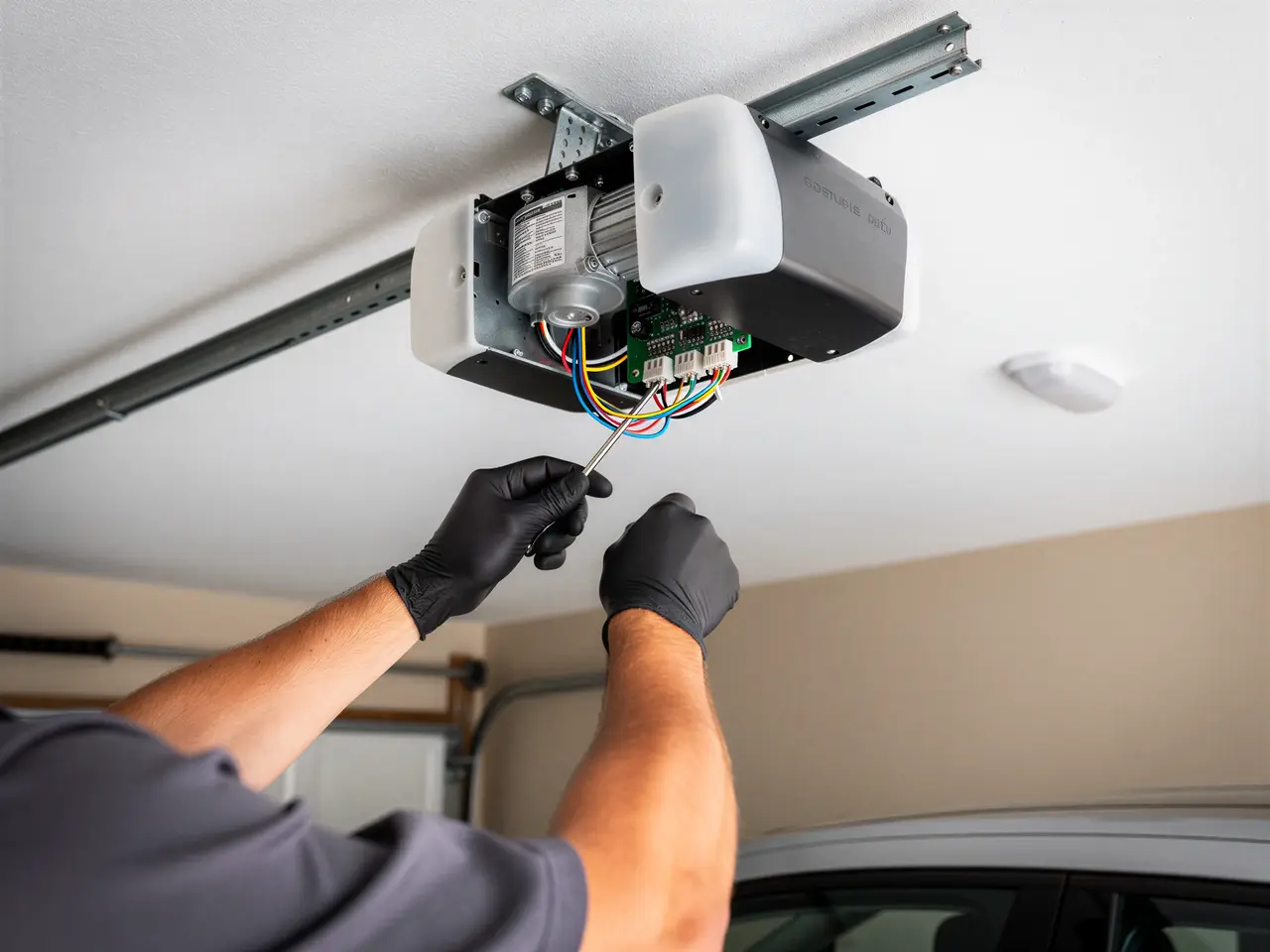
When we head the 18 miles out to Gordonsville, we load for the openers that actually show up on this side of the county, not whatever is newest on the shelf. A lot of houses here date to around 1979, and that means chain-drive units with worn nylon gears, tired capacitors, and logic boards that have outlived their expected life more than once. We carry replacement gear kits, circuit boards, drive chains, and a stock of photo-eye sensor kits, since older units out this way often never had one installed to begin with. We also bring belt-drive and screw-drive openers for anyone ready to replace rather than patch. What we don't carry is a guess - if a part isn't a common fit for the era of door we're looking at, we tell you that before we start pulling anything apart, not after.
Why It Happens Here
Gordonsville's housing stock centers on 1979, which puts a lot of original or first-replacement openers from the late 1970s through the 1990s still doing daily work. Those units predate the 1993 federal rule requiring auto-reverse photo-eye sensors, so some doors here still run on openers that stop on pressure alone, if they stop at all - a real safety gap, not a cosmetic one. The service area sits in a cold-climate band with severe winters, and cold does two things to an aging opener: it stiffens old grease in the drive gear until the motor strains against it, and it shrinks wiring insulation at the sensor leads until a connection that worked in July drops out in January. Combine 40-plus-year-old mechanicals with a hard freeze-thaw cycle and the failure point is almost always the same - a gear that's been grinding quietly for years finally lets go, usually on the coldest morning of the week.
What the Repair Takes
Most calls start the same way: we run the opener through a full cycle, watch where it hesitates or strains, and check the force and travel limits before touching anything. On the chain-drive units common to Gordonsville's older houses, the gear and sprocket kit is the most common fix - it's a 45-minute to hour job once we've confirmed that's the actual fault and not a bad capacitor or a dying logic board pretending to be a mechanical problem. If the unit predates auto-reverse sensors, we'll flag that separately from the repair itself, since it's a safety item worth addressing even if the opener otherwise runs fine. We test the safety reversal and sensor alignment on every job regardless of what we were called out for, because on units this age we'd rather catch it ourselves than have you find out the hard way.
Doing It Yourself
Swapping a worn drive gear or a capacitor isn't out of reach for someone comfortable with a screwdriver and disconnecting power first, and plenty of these parts are sold individually for exactly that. Where we'd pump the brakes is on anything involving the opener's force settings or the safety reversal circuit - on a unit built before auto-reverse was standard, getting that wrong doesn't just leave you with a door that doesn't close right, it leaves you with a door that won't stop on something in its path. If the logic board itself is the failure, diagnosing that versus a wiring fault takes a meter and some patience most people don't have lying around on a Saturday. Our honest limit: if the opener is original to a 1979-era build and the board's gone, we'll usually tell you replacement beats chasing parts for a 40-year-old chassis.
How It Shows Up
The classic sign on these older units is a grinding or clicking sound right before the door moves, which is the stripped nylon gear trying to catch on the drive sprocket - it gets louder over a week or two, then one morning the door just doesn't move at all. On houses with original wiring, you'll sometimes see the opener light flicker or the remote lose range before the whole unit quits, which points to a failing board rather than the gear. In winter, watch for a door that reverses for no reason or refuses to close the last few inches - on an opener from this era, that's often a misaligned or marginal sensor made worse by cold, not a mechanical fault at all. If the opener runs but the door doesn't track smoothly, that's usually the track or rollers, not the opener itself, and worth mentioning separately when you call.
How Long It Takes
A gear and sprocket swap or sensor realignment on-site typically runs under an hour once we've confirmed the diagnosis. A full logic board replacement takes longer mainly because of sourcing - boards for older chain-drive units aren't always something we're carrying for every model, and matching one for a unit this age can mean a short wait on the part rather than the labor itself. We don't stock every board for every opener built since the late 1970s, so if yours is an older or less common model, we'll tell you upfront whether it's a same-visit fix or a return trip once the part's in.
Frequently asked questions
Does my opener need a safety sensor if it's never had one?
If your opener predates 1993, it may never have come with photo-eye auto-reverse sensors, which are now federally required on new installs. We can add a sensor kit to an older unit, and given how many Gordonsville openers date to that earlier era, it's worth asking us to check during any service call.
Why does my opener struggle more in winter?
Cold stiffens old grease inside the drive gear housing, making the motor work harder to turn it, and it can shrink wiring insulation enough to loosen a sensor connection. On an opener original to a 1979-era house, that combination is often what finally finishes off a gear that's been wearing down for years.
Is it worth repairing an opener this old or should I replace it?
If the drive gear or a sensor has failed, repair usually makes sense and costs less than replacement. If the logic board itself is gone on a unit original to a 1979-era build, we'll usually say replacement is the better call, since sourcing boards for chassis that old isn't always straightforward.
Do you have a shop in Gordonsville?
No - we're based in Charlottesville and drive the 18 miles out to Gordonsville for service calls. We don't keep a local branch or stock here, so parts not already on the truck may mean a short return trip.
More garage door services in Gordonsville
Book garage door service in Charlottesville
Call now or request a quote - tell us what the door is doing and where you are.