
Charlottesville, VA · Garage Door Service
Spring Repair for Charlottesville Garage Doors
Broken torsion springs on Charlottesville's 1980s-era doors, explained: why the cold snaps here wear springs fast and what a repair actually involves.
- Repairs & new doors
- Springs & openers
- Serving 4 nearby communities
Why It Happens Here
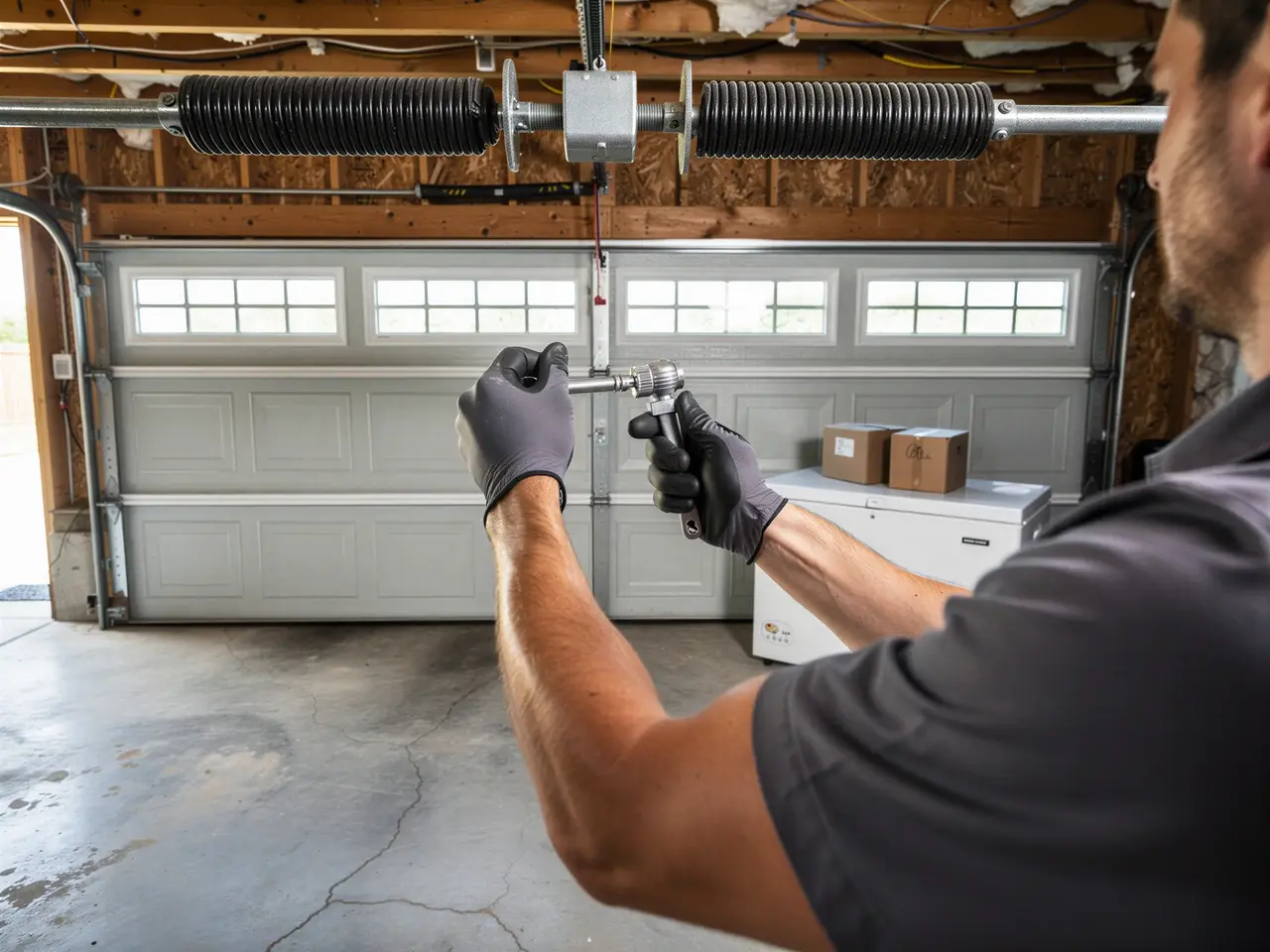
Most of the houses this company works on were built between 1944 and 2008, with the bulk of that stock going up in the 1980s and 90s across the eleven neighborhoods and nearby towns it covers. That matters for springs because a torsion spring is rated for a cycle count, not a calendar date, and a door installed in, say, 1986 has been through three or four decades of openings by now - it's at or past its rated life whether or not anyone's touched it.
The other piece is the cold. This area sits in a severe cold climate band, and steel springs lose some tension and get brittle with repeated freeze-thaw swings. A spring that's been quietly weakening for years will often let go on the first hard cold morning of the season, not because the cold broke it, but because the cold was the extra load that finished the job. That's why spring calls cluster in the coldest stretches - the fault was already there.
Put those two things together - an aging housing stock from a specific decade and a climate that stresses metal - and you get a predictable, recurring failure mode rather than a random one. It's not bad luck. It's math on an old spring in a cold snap.
What You Pay
A straight spring swap - same size, same door, no extra parts - costs less than a job where the cable, drum, or bottom bracket got damaged when the spring let go, which happens more often than homeowners expect because a snapping torsion spring can whip a cable off its drum on the way down.
Double doors generally run two springs instead of one, and if both are original to a house built decades ago, most owners choose to replace the pair together rather than wait for the second one to go next winter. That's a judgment call, not a rule, and a tech should walk you through the door-specific numbers before doing anything, not after.
We don't quote a flat number here because the size, type, and age of the spring genuinely change what's involved, and a page that promises one price for every door in a service area this size would be guessing. What we can say: a torsion spring job is parts-and-labor, it's done at the house, and it shouldn't involve replacing anything beyond the spring unless something else actually failed with it.
How Long It Takes
A single broken torsion spring, standard size, is usually a same-visit fix once a tech is on site - it's a known part on a known type of hardware. Where it runs long is when the door is older than the spring itself expects, meaning the drums, bearing plates, or track have worn in ways that weren't obvious until the spring came off and the door could be inspected properly.
Houses in this area built in the 1980s and 90s often still have their original torsion hardware, and original hardware from that era can mean a bearing plate or center bracket that's seized or worn oval, not just a spring that snapped. That adds time, because it's a second part to source and fit, not a second trip.
One honest limit: if a spring size is unusual or discontinued, that part may not be on the truck and may need a day or two to get in. That's rare on standard residential doors from this period, but it happens, and it's better to say so here than to promise a same-day fix for every door.
How It Shows Up
The classic sign is a door that won't lift, or lifts a few inches and stops, with a loud bang from the garage a day or two before - that bang is the spring itself letting go, usually when the door is down and under no load. After that, the opener will strain, chatter, or trip its own force sensor trying to lift a door it was never meant to lift alone.
A quieter version shows up as a door that feels heavier by the week - harder to lift by hand, slower to close, an opener that labors a little more each month. That's a spring losing tension gradually rather than snapping outright, and it's common on doors that have been through enough cold Virginia winters that the metal's just tired.
Either way, the fix is the same part, just caught at a different stage. Catching the slow version before it snaps usually means less cable and drum damage, which is the real reason to get a labored door looked at instead of waiting for the bang.
Frequently asked questions
Why do garage door springs break more in winter around here?
This area sits in a severe cold climate band, and cold steel loses tension and gets brittle. A spring that's already near the end of its cycle life often fails on the first hard cold snap because the cold adds just enough extra load to finish it off, not because cold alone causes the break.
Is my door's spring original if the house is from the 1980s?
It's possible. A lot of the housing stock in this service area dates to the 1980s and 90s, and torsion springs from that era were rated for a cycle count that most original doors have long since passed, even if nothing's ever visibly gone wrong.
Can I replace just one spring on a double door?
You can, but if both springs are the same age, most owners replace the pair at once so the door lifts evenly and they're not calling again next winter for the second one. A tech should give you the specific case for your door before deciding.
Will a broken spring damage anything else?
Sometimes. A snapping torsion spring can whip the cable off its drum or stress the bottom bracket on the way down. That's why a spring call sometimes turns into a cable or drum repair too - the tech should check those before closing the job.
Related services
By Neighborhood
Spring Repair across the Charlottesville area
We also handle spring repair in these Charlottesville-area suburbs.
Book garage door service in Charlottesville
Call now or request a quote - tell us what the door is doing and where you are.