
Charlottesville, VA · Garage Door Service
What a Service Call Actually Covers in This Climate
A Charlottesville garage door service call covers diagnosis, parts, and labor on doors built from 1944 to 2008 in a climate that pushes torsion springs hard.
- Repairs & new doors
- Springs & openers
- Serving 4 nearby communities
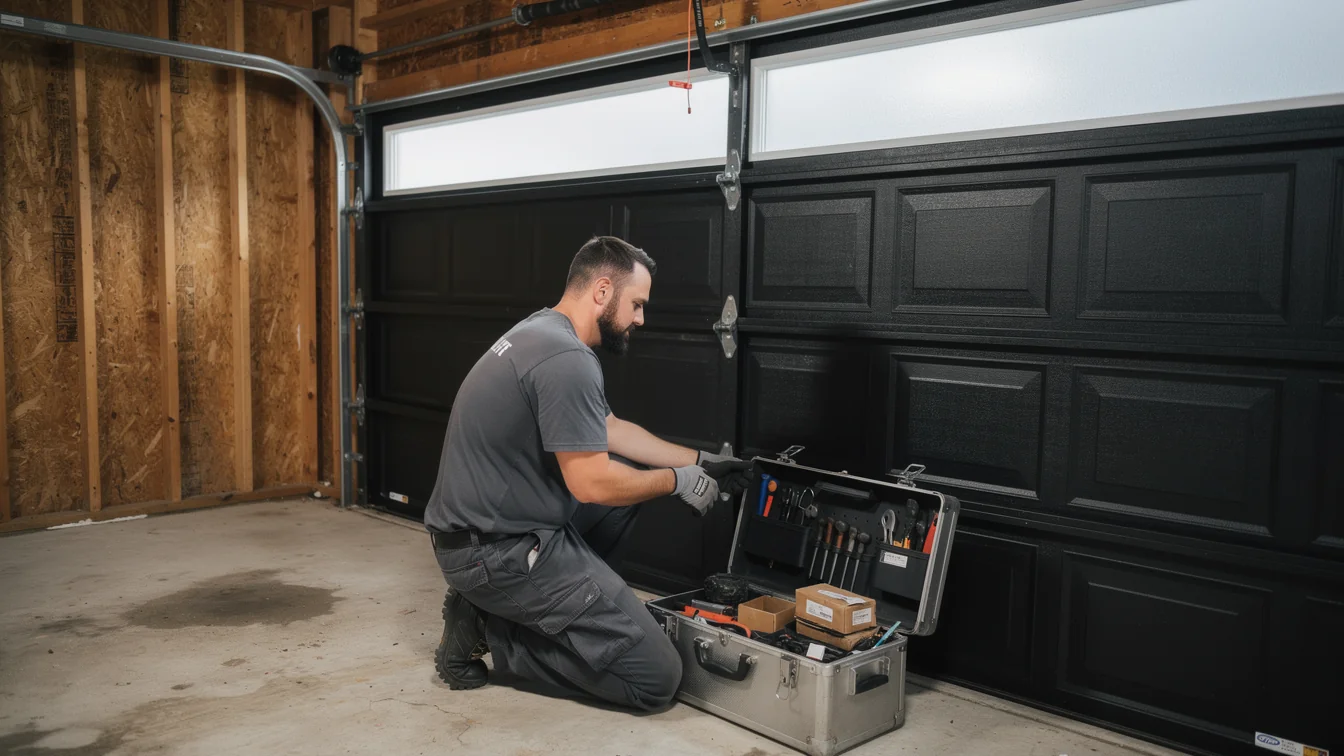
What the Weather Here Does to It
Charlottesville sits in a cold-severe climate band, and that matters more to a garage door than most owners think. Steel contracts in cold, torsion springs lose a little lift on the coldest mornings, and nylon rollers that were fine in August start to squeal and crack by January. None of that is dramatic on its own, but it adds up faster on a door that's already twenty or thirty years old, which describes a lot of what's out there. Housing in the service area was built between 1944 and 2008, with the bulk of it going up in the 1980s and 90s across the eleven named areas we work in. A door installed during that run has had decades of seasonal swing working on the same spring, the same hinges, the same weatherstrip. The hardware wasn't built wrong - it's just been doing this job through a lot of winters. When a call comes in for a door that's suddenly stiff or noisy right as the temperature drops, cold isn't usually the root cause. It's the thing that finally exposes wear that was already there.
Checking It Yourself
Before you call anyone, pull the manual release and try lifting the door by hand, slow and steady, about halfway. It should hold its position on its own. If it drops or shoots up, the spring is doing less work than it used to, and that's not a DIY fix - a wound torsion spring under tension is the one part of this job we tell people not to touch themselves. Next, look at the track brackets and the hinges between panels, especially on a door that dates to the 80s or 90s stock common in this area. Rust streaks at the hinge, elongated bolt holes, or a track that's pulled slightly away from the wall are all signs of age catching up with original hardware. Listen to the opener, too. A grinding or popping sound usually means the gears inside are worn, which is common once a unit's put in fifteen or twenty winters. None of this tells you exactly what's wrong, but it tells you whether what you're dealing with is a cable, a spring, a track, or the opener itself - and that's useful information to have ready when you make the call, because it changes what we bring on the truck.
What You Pay
A service call has two pieces: the diagnostic visit and whatever the fix turns out to need. The diagnostic covers a tech coming out, opening the door up, and telling you straight what's actually broken versus what's just old and ugly but still working. From there, cost depends entirely on parts and labor for that specific repair - a cable isn't priced like a spring, and a spring isn't priced like an opener board. We don't quote a number over the phone before anyone's looked at the door, because guessing wrong either way isn't fair to you. What we can tell you is that with over 7,726 owner-occupied houses in the service area, most of the doors we see share a handful of failure patterns tied to the 1980s and 90s build-out, so parts availability for that era's hardware is usually not a problem. Where it gets slower is original equipment from the 1940s through 60s end of that 1944-2008 range - some of that hardware is discontinued, and sourcing a match can take longer than the repair itself. That's the one honest limit here: we'll tell you when replacement makes more sense than waiting on a part nobody makes anymore.
What Is Going On
Most calls fall into a short list once you've seen enough of them. On the older end of the 1944-2008 range, it's usually a spring that's simply done - metal fatigue doesn't care how well you maintained it. On the 1980s and 90s stock that makes up most of what's here, the common failure is a worn roller or a bent track from the door coming off-plumb slightly over time, or an opener board that's finally given out after running daily for two or three decades. Cables fray at the drum end and nobody notices until one snaps. None of these are mysterious once you're looking at the door directly, which is why we don't diagnose over the phone. What's less common, at least based on what actually comes through on calls, is a full structural problem with the door itself - panels built in this era were solid steel or wood and tend to outlast the hardware bolted to them. So the honest version of 'what's going on' most of the time is: the door is fine, the thirty-year-old parts attached to it are not.
Frequently asked questions
How old does a garage door have to be before parts get hard to find?
It depends more on the manufacturer than the exact year, but hardware from the earliest part of the 1944-2008 building range is the slowest to source. Doors and openers from the common 1980s-90s stock are easier, since that's what most of the area has and parts suppliers stock accordingly.
Why does my door act up specifically in winter?
Charlottesville sits in a cold-severe climate band, and cold steel and aging lubricant make existing wear more obvious. A spring or roller that was already marginal often finally fails once temperatures drop, even though the cold itself isn't the underlying cause.
Can I replace a torsion spring myself to save the service call?
No. A wound torsion spring holds real tension and it's the one repair we tell every caller not to attempt solo, regardless of how handy you are. The diagnostic visit exists partly so a tech handles that part safely.
Do you give a price before coming out?
Not accurately, no. Cost depends on which part failed and what it takes to fix it, and guessing before a tech has opened the door up tends to be wrong in one direction or the other. The diagnostic visit is what gets you an honest number.
Related garage door services in Charlottesville
More garage door guides
Book garage door service in Charlottesville
Call now or request a quote - tell us what the door is doing and where you are.