
Charlottesville, VA · Garage Door Service
Garage Door Installation for Charlottesville Homes
New garage door installation in Charlottesville, VA, built for homes from the 1980s and 90s and the area's cold winters. See what drives cost and timing.
- Repairs & new doors
- Springs & openers
- Serving 4 nearby communities
Why It Happens Here
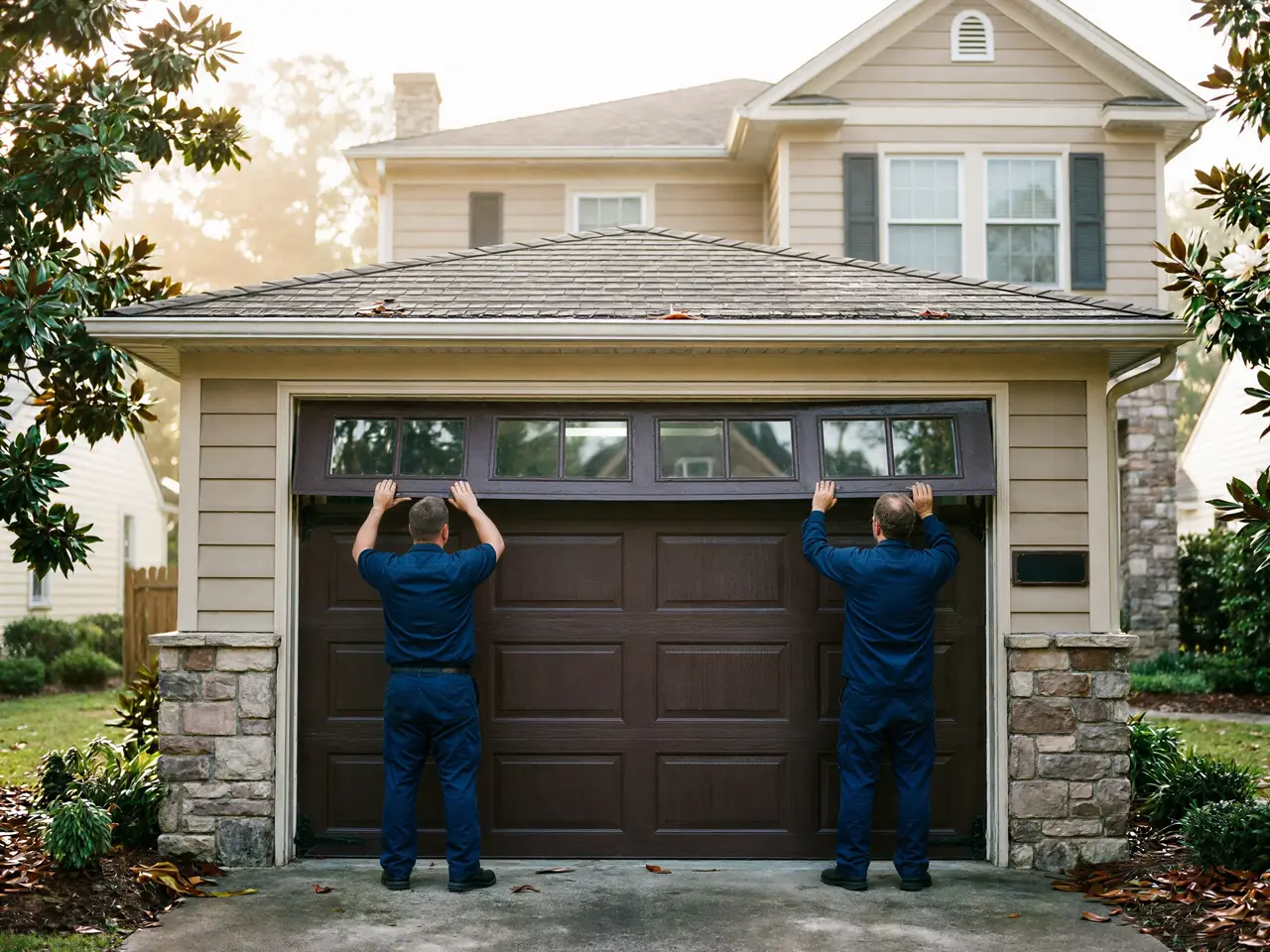
Most of the garage doors we replace here went in sometime between 1944 and 2008, with the median build year sitting at 1982. That's not a coincidence of record-keeping - it's just when the houses went up. Across the 11 named areas we work in, from the older in-town blocks to the newer subdivisions, the bulk of the housing stock dates to the 1980s and 90s, and a lot of those original doors are still hanging on the same track hardware the builder installed. A door built to a mid-80s standard wasn't engineered with today's insulation expectations, and Charlottesville sits in a cold-severe climate band, which means a thin steel skin with no thermal break has been working against the weather for three or four decades straight. Springs lose tension faster in that kind of swing. Panels that were fine in a mild year start to show rust bloom and bowing once enough freeze-thaw cycles stack up. By the time a homeowner calls us, it's often not one broken part - it's a whole door system that's simply aged out, in a climate that never gave it an easy year. New installation isn't about upgrading for style. In most of these cases it's about replacing a door that was never built for the decades of cold it ended up living through.
What You Pay
We don't have a flat number to hand you here, and we're not going to invent one - door size, insulation level, track configuration, and whether the opener needs replacing too all move the number, and none of that gets settled until someone's looked at your actual opening. What we can tell you is what tends to drive the decision for owners in this area. With a median household income of $94,600 across the service area, most people we talk to aren't shopping the bargain bin door - they're weighing an insulated steel door against the cost of another decade of cold-climate wear on a cheaper one. That's a real trade-off, not a sales pitch: a double-insulated door costs more up front and less in callback repairs over a Virginia winter. The honest limitation is this - if your opening is out of square, which happens more often in the older in-town stock than in newer builds, that adds labor we can't quote sight unseen. We'll give you a real number after we've measured, not before.
How Long It Takes
Installation day itself depends on what's coming out and what's going in - a straight swap on existing track is a different job than tearing out old jamb hardware that's been there since the house was built. We don't have a standard duration figure to publish, so we won't pretend to one. What does affect scheduling more than people expect is the climate. In a cold-severe band like ours, winter installs mean we're working against stiff weatherstripping, frozen fasteners on anything original to the house, and shorter daylight for an outdoor job. None of that is unusual here - it's just part of planning a Charlottesville install in January versus June. If your opening needs framing work because the house settled the way a lot of the 1980s-era stock around here has, that adds a step before the new door ever goes up. We'd rather tell you that up front than have you waiting on a day that was never realistic.
How It Shows Up
The early signs are usually small and easy to write off. A door that's heavier to lift by hand than it used to be. A seam at the bottom panel that never used to let daylight through. Rust starting at the hinge bolts rather than the face of the panel - that's a cold-climate tell, not just age. In the older sections of the service area, including blocks close to North Downtown and Jefferson Park Avenue, we see original wood-composite doors from the earlier end of that 1944-2008 build range warping at the bottom rail where ground moisture and winter freeze meet. Out toward Farmington and the newer 1980s-90s construction, it's more often steel doors with foam insulation that's degraded and let the panel start to oil-can - that wavy flex you can see when the door's halfway up. Either way, by the time a door is visibly failing, the honest answer is usually replacement rather than another repair. Patching a 40-year-old track system to buy another winter rarely saves anyone money once you count the second call.
Frequently asked questions
Do older Charlottesville homes need a different kind of garage door than newer ones?
Often yes. Homes built earlier in the 1944-2008 range, especially original wood-composite doors, tend to need full opening work along with the door itself. Houses from the 1980s-90s stock usually just need the door and track swapped since the framing is newer. We can tell you which applies once we've seen your opening.
Why does my garage door feel heavier every winter?
In a cold-severe climate, aging springs lose tension faster and steel panels without a thermal break stiffen in low temperatures. If your door dates to the median build year around here, 1982, it's been through four decades of that cycle, which is usually more than enough to explain the extra effort.
Can you just tell me a price over the phone?
Not honestly. Door size, insulation level, and the condition of your existing opening all change the cost, and we won't quote a number before we've measured. We'll give you a real figure after a visit, not a guess that changes once we show up.
Related services
Related guides
Book garage door service in Charlottesville
Call now or request a quote - tell us what the door is doing and where you are.