
Charlottesville, VA · Garage Door Service
Is Your Garage Door Worth Fixing, or Has It Had Its Run
A look at what Charlottesville's 1980s-era housing stock and cold winters do to garage doors, and how to tell if yours still has life in it.
- Repairs & new doors
- Springs & openers
- Serving 4 nearby communities
What the Weather Here Does to It
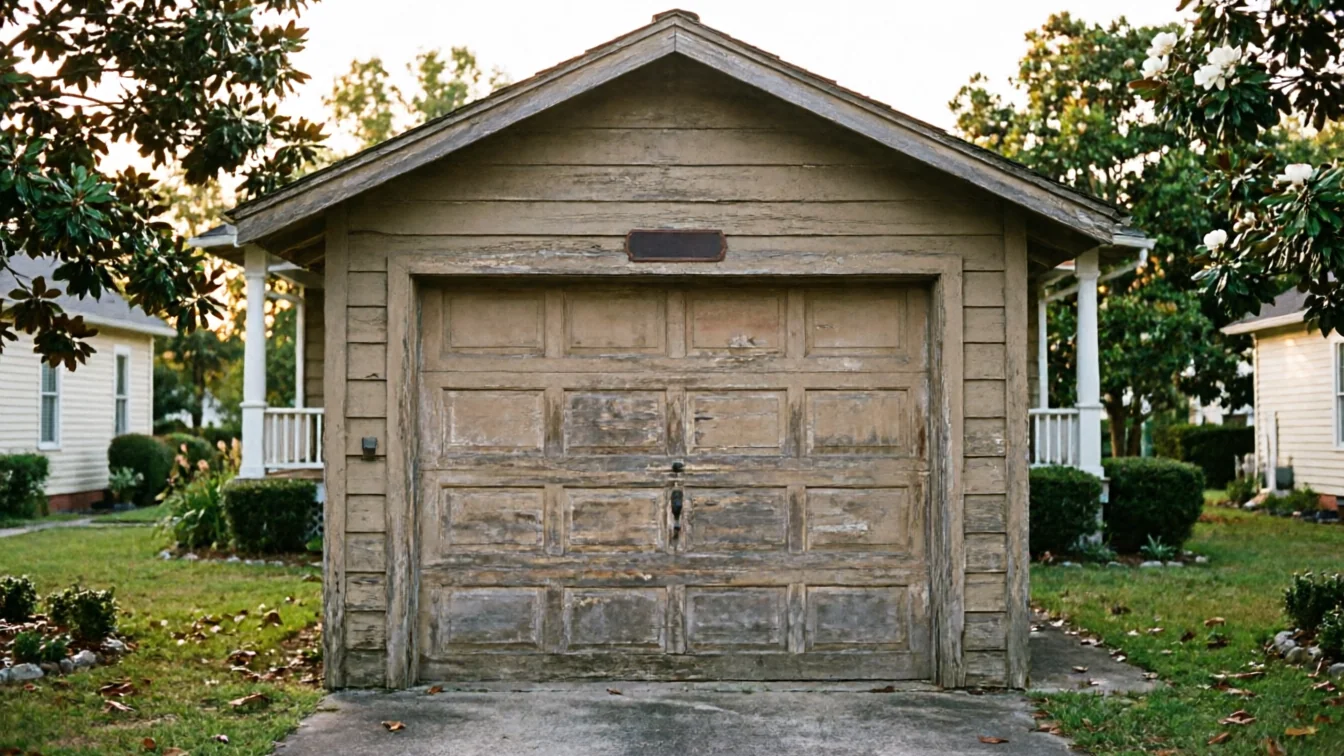
Charlottesville sits in a cold climate band with winters severe enough to matter to a garage door, and most of the doors we look at were put in somewhere between 1944 and 2008, with the bulk of that stock dating to the 1980s and 90s. That matters because the weatherstripping and bottom seal on a door that age were never built to last forty winters. Once that seal cracks, cold air sits against the panel steel every night, and on an uninsulated door from that era you'll feel it in the garage and sometimes in the room next to it.
The hardware feels it too. A torsion spring is rated in cycles, not years, but cold steel is stiffer and more likely to snap on the first hard pull of a January morning than in July. If your door is original to a house built in the 80s or 90s, the spring on it has likely already been replaced once, maybe twice - and if it hasn't, it's due. That's not a scare line, it's just what the math on an 8,000 to 10,000-cycle spring looks like after three and a half decades of daily use.
None of this means every older door needs to go. It means the weather here is a harder test than it would be in a milder climate, and a door that's been neglected shows it faster.
Checking It Yourself
Before you call anyone, pull the release handle and lift the door by hand with the opener disconnected. A door in reasonable shape should move with one hand and stay roughly where you leave it, half open or all the way. If it crashes down or you can barely lift it, the spring is tired or gone, which is common on doors from the 1980s and 90s stock that makes up most of the area.
Next, look at the bottom seal. If it's flat, cracked, or missing chunks, that's an easy swap and worth doing before winter, not after, given how cold it gets here. Check the tracks for rust or bends - on a house built before the 2000s the tracks are often original, and galvanized steel that old can pit enough to throw the rollers off.
Last, listen. A door that grinds, pops, or shudders on the way up is usually telling you about a roller or a hinge, not the whole unit. Write down what you hear and when it happens - that's more useful to a tech on the phone than
What You Pay
We're not going to give you a number here that doesn't mean anything without seeing the door. What we can tell you is what drives the cost on a job in this area: the age and size of the door, whether the track or spring size is a common one or something discontinued from an older build, and how much of the opener hardware is original versus already replaced.
A door from the median-era stock around here - built in the early 80s - sometimes needs a spring sized for a track system nobody carries off the shelf anymore, and that adds a day to the job, not a huge markup, but it's honest to say up front. A newer door, closer to the 2000s end of the housing range, is usually a straightforward parts swap.
The one thing we won't do is quote a flat price over the phone for a door we haven't looked at. Too many variables - spring size, track condition, whether the opener is original - change the number enough that a phone quote would just be a guess dressed up as an answer.
What Is Going On
Most of the service calls in this area trace back to the same thing: a door installed when the house was built, running on hardware that was fine for 1985 but is tired now. With housing here spanning 1944 to 2008 and a median around 1982, a lot of doors are sitting right at the point where springs, rollers, and openers all start failing in the same year or two, because they were all installed together and they wear out together.
That clustering shows up across the subdivisions around Charlottesville - the same 1980s and 90s builds repeat from one neighborhood to the next, so the failures repeat too. It's not unusual to go to three houses in a week with the identical broken part because they were built by the same crew in the same decade.
The honest answer on whether to fix or replace usually comes down to the opener and the panels, not just the spring. A spring is cheap to replace on almost any door. A door with rusted-through panels or a track bent from years of a dragging roller is a different conversation, and sometimes replacement is the better use of your money than another repair.
Frequently asked questions
How old does a garage door have to be before I should just replace it instead of repairing it?
There's no fixed age - it depends more on the panels and track than the calendar. A door from the 1980s or 90s stock common here can still be worth fixing if the panels are solid and it's just a spring or seal. Once the track is bent or panels are rusted through, repair stops making sense.
Does the cold here actually cause garage door problems, or is that just a sales line?
It's real. Charlottesville sits in a cold climate band with severe winters, and cold steel is stiffer and more likely to fail under tension, which is exactly what a torsion spring is under all the time. A worn seal also lets more cold into the garage in a severe winter than it would in a milder one.
My house was built in the 80s - should I expect the original door hardware to still be in there?
Often yes, at least partly. A lot of the housing stock in this area dates to the 1980s and 90s, and it's common to find an original spring or opener still running on a house that age. If nobody's touched it, it's usually overdue.
Related garage door services in Charlottesville
More garage door guides
Book garage door service in Charlottesville
Call now or request a quote - tell us what the door is doing and where you are.