
Charlottesville, VA · Garage Door Service
What Charlottesville Winters Do to Your Garage Door
A look at how Charlottesville's cold winters and 1980s-90s housing stock wear on garage door openers, springs, and tracks, plus what to check before you call for a repair.
- Repairs & new doors
- Springs & openers
- Serving 4 nearby communities
What the Weather Here Does to It
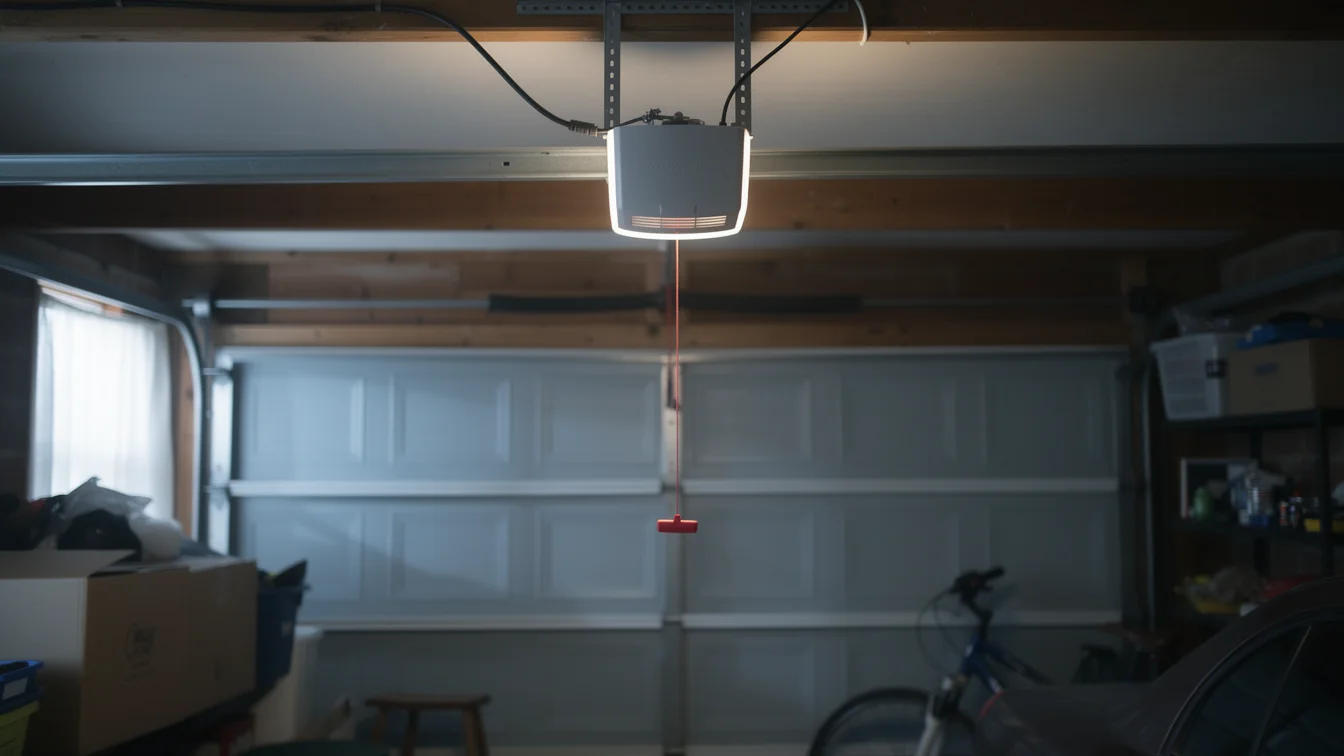
Charlottesville sits in a cold-severe climate band, and that matters more for a garage door than most people think. Steel contracts in the cold, grease stiffens, and the nylon rollers common on doors from the 1980s and 90s get brittle faster than they would somewhere milder. Most of the housing stock in this service area went up between 1944 and 2008, with the median build year landing around 1982 - which means a big share of doors out there are original or close to it, running on hardware that was never built with today's openers in mind.
When the temperature swings hard, torsion springs lose a little tension, openers that were fine in September start grinding in January, and a door that closed quiet in summer suddenly bangs the last six inches of travel. None of that means the door is failing. It means cold metal moves differently than warm metal, and a door sized and balanced for a 1982 house is more sensitive to that than a newer one. If your door has gotten noisy or slow to respond only since the weather turned, that's the climate talking before it's the opener.
Checking It Yourself
Before you call anyone, there are a few things worth looking at, especially on a house from the 1980s or 90s stock that's common across this area. Pull the manual release and lift the door by hand - if it's hard to lift, or it doesn't sit roughly waist-high when you let go, the springs are losing balance and that's not something to force with the opener motor.
Check the rollers. On a door that old, nylon rollers often look fine but have gone brittle from years of cold snaps, and they'll chip or flat-spot instead of rolling smooth. Look at the track for separation from the wall bracket, which shows up more after a hard freeze-thaw stretch than in warm months.
And check the opener itself after a power outage. Houses with openers from this era often lose their programmed limits when the power drops, so the door might reverse early or refuse to seal fully even though nothing mechanical is wrong - a reset of the opener's travel limits fixes that more often than a part does. One honest limit here: if the spring is original to a house built before the mid-80s, we don't recommend patching it. Replacing both springs as a pair costs less in the long run than a mismatched repair that fails again in a year.
What You Pay
We don't post a flat price list here because what a door needs depends heavily on its age and what's already on it. A door on 1980s-90s hardware, which describes a lot of houses across the eleven areas we work in, usually needs different parts than a door built after 2000 - the drum sizes, spring wire gauge, and track profiles changed over that stretch, and matching the wrong one to an old frame is how doors end up unbalanced again within months.
What we can tell you is that older stock tends to need more than one thing fixed at once. A spring job on an original 1980s door often turns up worn rollers or a cable fraying at the drum, because those parts age on roughly the same clock. Replacing them together costs less than coming back twice. If a door is closer to original condition from the early part of that 1944-2008 build range, full opener and track replacement is sometimes the more honest answer than another round of patch repairs.
What Is Going On
Most of the service calls that come in after a cold snap or a power outage trace back to the same handful of causes. Springs lose tension in sustained cold, which is a bigger factor here given the severe cold climate band than it would be somewhere with milder winters. Openers lose their travel limits after a power outage and the door starts behaving like something mechanical broke, when really it just needs reprogramming.
On the older end of the local housing stock - closer to the 1944 end of that range than the 1982 median - doors are also more likely to be running on hardware that predates safety sensors entirely, which is worth knowing if you're not sure yours has them. And across the newer 1980s-90s builds that make up most of what's out there, the common failure point is rollers and cable wear rather than the spring itself, since those doors were often installed with springs sized a little heavier than strictly needed.
If you're not sure which of these applies to your door, the opener model number and the door's install date (often stamped on the inside of a panel) tell us more over the phone than a description of the noise does.
Frequently asked questions
Why does my garage door get louder in winter?
Cold makes steel springs contract and grease stiffen, so a door that runs quiet in summer can grind or bang in winter without anything actually being broken. On older rollers, common in houses from the 1980s and 90s, the material itself gets brittle in the cold and that adds to the noise.
My opener stopped responding right after a power outage. Is that the motor?
Usually not. Power outages often erase an opener's programmed travel limits, so it looks like a mechanical failure but is really a reset issue. Try reprogramming the open and close limits before assuming a part failed.
Is it normal for my door to be hard to lift by hand?
No. If the manual release doesn't let the door lift easily and hold roughly waist-high on its own, the springs have lost balance. That's worth addressing before you rely on the opener motor to force it, which just wears the motor faster.
How do I know if my door's hardware is original?
Check the inside of a panel for a stamped install date, and look at the roller material - nylon rollers that have gone brittle or chipped are a sign of age. Given that most houses in this area date to the 1980s and 90s, original hardware is common.
Related garage door services in Charlottesville
More garage door guides
Book garage door service in Charlottesville
Call now or request a quote - tell us what the door is doing and where you are.